対話から実践へ:ICOMOSにおけるEPたちの協働の実践
対話から実践へ:ICOMOSにおけるEPたちの協働の実践
From Dialogue to Practice: Collaborative Experiences of Emerging Professionals within ICOMOS
BURETTE Aurore (Icomos Belgium), PEREIRA Mariana (Macau/Icomos Portugal), PETROVIĆ Danica (Serbia/ Icomos Germany), NURPEISSOV Temirlan (Kazakhstan/ Icomos Germany)
=============
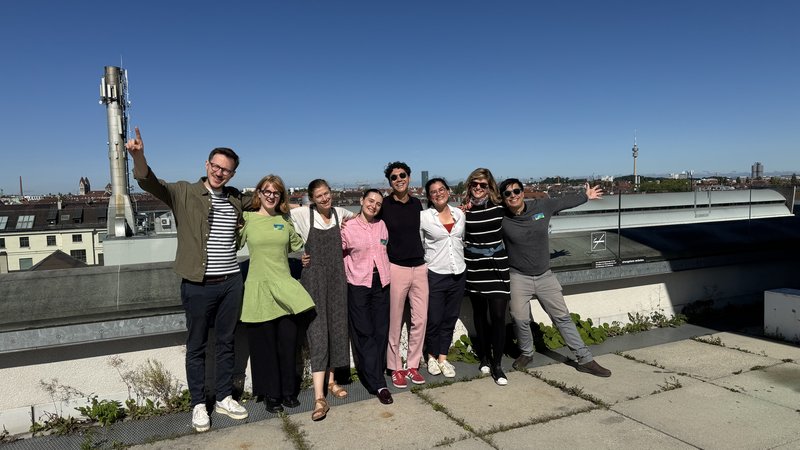
国際EPで活躍しているAurore, Mariana, Danica, Temirlanの4名が、国際的な取組について、素晴らしいレポートを書いてくださいました。ヨーロッパのEPを中心に、現在、様々なテーマについて、オンライン・オンサイトでワークショップが実施されており、ICOMOS Univeristy Forumとも連携してサマースクールの実施にも貢献しています。少しずつ対象地域も拡大しているところであり、ヨーロッパに限定されない活動の幅を見せています。4名の著者たちからのメッセージにもあるように、EPだけでなく、ICOMOSとして日本もこの流れにかかわっていければ、素敵だと思います。国際だけでなく、地域としてもプロジェクトを実施しよう、というアイディアは以前からあり、例えば韓国のEP達と研究ワークショップをやりたい、という思いを共有しています。オンラインで関係性を構築し、対面でネットワークをさらに強化していくことで、国を超えて、長期的に共存していくことができる、そんな希望に満ちたレポートをお楽しみください。
宮﨑彩
=============
Introduction
The growing involvement of emerging professionals within ICOMOS reflects broader transformations currently affecting the heritage field worldwide. Questions related to climate change, conflict, migration, colonial legacies, dissonant narratives, and the conservation of modern heritage increasingly require interdisciplinary, international, and intergenerational approaches. At the same time, younger heritage professionals are seeking more open and collaborative spaces in which they can exchange experiences, test methodologies, and actively contribute to contemporary heritage debates beyond traditional institutional structures.
The Emerging Professionals Working Group (EPWG) is a global ICOMOS network dedicated to supporting early-career heritage practitioners, researchers and students. Members of this network are commonly referred to as Emerging Professionals (EPs).
This article reflects on the role of the EPWG and shares practical experiences of international collaboration developed through recent workshops and Summer Schools. The focus is on the lived experience of collaboration between emerging professionals from different countries and disciplinary backgrounds, and on how these exchanges gradually evolved into long-term working relationships, shared research interests, and collective heritage initiatives.
The article is written collectively by members of the EPWG network, who have been directly involved in the conception and organisation of several recent international workshops and Summer Schools: Aurore Burette (Icomos Belgium), Mariana Pereira (Macau/Icomos Portugal), Danica Petrović (Serbia/ Icomos Germany), and Temirlan Nurpeisov (Kazakhstan/ Icomos Germany). Coming from different professional and cultural contexts, the authors share a common interest in creating accessible and collaborative spaces for emerging heritage professionals within ICOMOS.
The examples of recent online and on-site workshops demonstrate how collaboration between emerging professionals can generate meaningful professional experiences and contribute to broader reflections within the heritage field.
Building a Collaborative Network of the Emerging Professionals: Establishing Work Mode and Priorities
The collaboration between members of the Emerging Professionals Working Group of ICOMOS Germany, Portugal and Belgium did not begin as a fully planned structure. It grew gradually through encounters, conversations, and a shared sense that emerging professionals needed more open spaces to discuss heritage beyond national frameworks. One of the important starting points was the 2022 Summer School Heritage in the Shadow of Conflictorganised by ICOMOS Denmark and ICOMOS Germany. The Summer School brought together questions that would later become central to our work: how to understand places marked by conflict and how to create formats in which younger professionals can contribute not only as participants but also as organisers, speakers, and active voices within ICOMOS.
After this initial exchange, the collaboration continued through monthly European Emerging Professionals meetings. At the beginning, these meetings were a way to stay in contact and to understand what each group was doing locally. Slowly, however, they became a working space in their own right. Through these regular conversations, EPs from Germany, Portugal and Belgium began to develop common interests, test ideas together, and consider how small online exchanges could grow into larger, more ambitious formats. In this process, the collaboration also became more personal. It was not only a matter of institutional cooperation, but also of trust, friendship, and the possibility to rely on one another while building something new. This way of working reflects a broader understanding of the role of the EPWG within ICOMOS. Emerging Professionals need accessible spaces for orientation, peer exchange, mentoring, and professional development. Recent discussions on the future structure of the EPWG have similarly underlined the need to balance representative functions with open and inclusive forms of participation, so that new and early-career members can find clearer pathways into ICOMOS and remain meaningfully connected across regions, committees and professional backgrounds.
So far, this cooperation has resulted in three online events and one on-site event. Each of them approached heritage from a different perspective, but they were all shaped by the same understanding: heritage questions are never isolated. They are connected to places, political contexts, memories, professional responsibilities, and different local experiences. This is why the exchange between Emerging Professionals became so important: each participant brought their own perspective, while also demonstrating a willingness to listen to and learn from others.
Through these activities, a particular working mode began to take shape, based on regular exchange, shared responsibility, and the attempt to bring emerging professionals into dialogue with more experienced experts. At the same time, the format of the conversations keeps the atmosphere open and approachable. The strength of this collaboration lies precisely in this balance: connecting serious, often difficult heritage topics with a supportive, curious, and genuinely collaborative working environment.
In this sense, the events organised by EPs have functioned as small but important teaching and learning spaces, allowing participants to test heritage concepts in practice, to encounter different perspectives, and to understand that conservation is not solely a technical field, but also a space of dialogue between cultural values, multiple meanings, diverse social contexts and professional responsibilities.
The next and most ambitious step in this process is the preparation of the conference and workshop Global Dissonant Modernities: Designing the Future for 20th-Century Architectural Monuments and Sites in Almaty, Kazakhstan (17-21 August, 2026), which is now also being developed in collaboration with EPWG Kazakhstan. What began in 2022 as a smaller European exchange has grown into a broader collaboration across different contexts and regions. The Almaty event continues this trajectory, bringing together emerging and established professionals to discuss how heritage is understood, contested, protected, and reimagined in places shaped by complex modern histories.
Organising Online and On-site events
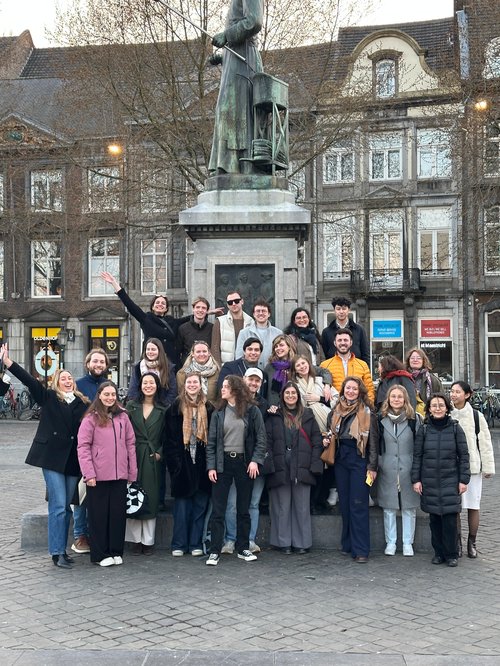
The events we organised together became an important part of how our collaboration took shape and demonstrated how EPs could work together in practice. Most ideas started in our monthly European EP meetings, a space to stay connected and exchange what each group was doing. Gradually, they also became a place where new formats of engagement were developed. A topic would usually appear through open discussion: why it mattered, how it related to our different local contexts, and which voices could contribute to it. As the event materialized, the cohorts formed, and the meetings became more frequent. Our discussions then moved toward concrete questions of programme, speakers, participants, moderation, communication, and practical organisation.
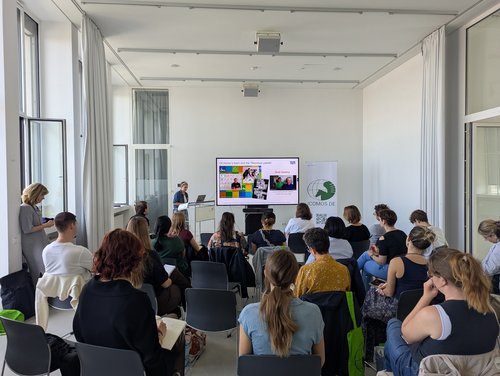
Two important aspects emerged from these collaborations, the intergenerational dialogue and the balance between flexibility and structure. The workshops were organised by volunteers working across different countries, time zones, and professional realities. Therefore, the collective organisation gradually developed its own internal rhythm and methods: tasks were distributed according to personal expertise and availability, while major conceptual decisions were discussed collectively. This process created an environment where emerging professionals could gain experience not only in heritage debates themselves, but also in moderation, academic coordination, communication, publication work, and international project organisation.
Focus on the 2024 Dissonant Heritage Autumn School
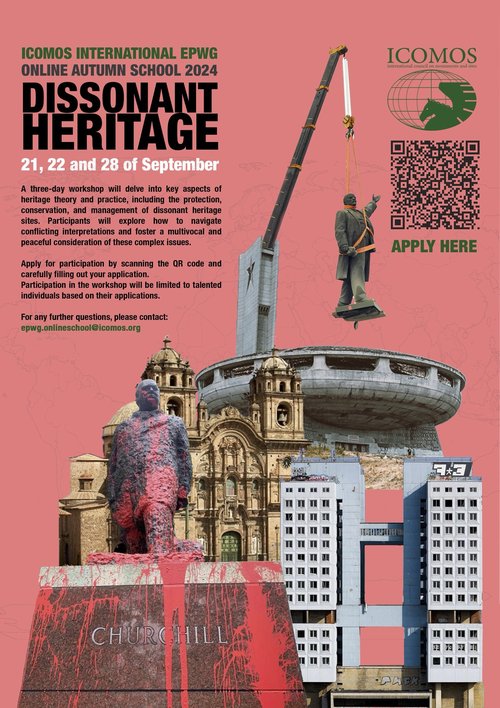
The collaborative process became especially visible in the 2024 online workshop Dissonant Heritage organised by ICOMOS EPWG network from Portugal, Germany, Belgium, and Italy with the support of the ICOMOS University Forum. The event marked a moment when the cooperation expanded more clearly toward a wider European EP network. It created a space to discuss contested, politically sensitive, and uncomfortable heritage from different local perspectives.
Building upon previous online events focused on conflict and climate change, the workshop addressed heritage that remains socially, politically, or culturally contested. The topic itself resonated strongly with many participants and organisers, particularly because dissonant heritage is not limited to one region or historical context. Across different countries, participants encountered difficult questions concerning monuments, colonial heritage, socialist modernism, memories of war, dictatorship, discrimination, and unresolved historical trauma.
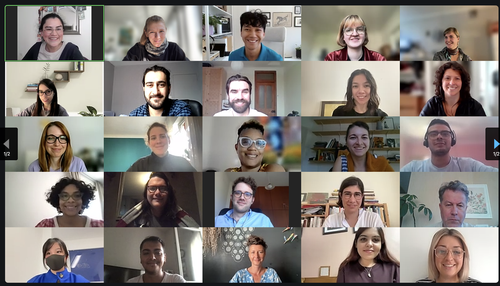
The online format enabled the participation of emerging professionals and keynote speakers from a wide range of countries and disciplinary backgrounds. Presentations addressed case studies from Eastern Europe, Latin America, Central Asia, East Asia, Northeastern Africa, and Northern Europe, demonstrating the diversity of approaches to contested heritage. Discussions explored how dissonant heritage can be safeguarded, and how it can be interpreted, communicated, and critically discussed within society.
The workshop intentionally combined theoretical reflections with practical case studies. Speakers presented experiences related to conservation management plans, post-conflict heritage, colonial heritage narratives, “dark heritage”, and participatory approaches to difficult histories. One recurring theme throughout the discussions was the need to move beyond simplistic oppositions between preservation and rejection. Instead, participants reflected on how heritage can become a space for dialogue, multivocality, and critical engagement with the past.
The organisational structure of the workshop also reflected the broader objectives of the EPWG collaboration. Alongside keynote lectures, participants worked in breakout groups guided by tutors and concluding panellists, encouraging more personal and collaborative exchanges. The workshop therefore functioned as a pedagogical and experimental space where emerging professionals could collectively test ideas, methodologies, and ethical approaches to difficult heritage topics.
Finally, the workshop also demonstrated how online formats can create meaningful international exchange despite geographical distance and time zones. While initially developed out of practical necessity, the online workshops became valuable tools for connecting participants who otherwise might not have access to international heritage discussions due to financial, geographical, or institutional limitations. In this sense, the Dissonant Heritage Autumn School highlighted one of the core strengths of the EPWG approach: creating accessible international platforms where emerging professionals can actively participate in shaping contemporary heritage discourse.
Focus on the 2025 Olympiapark Munich: Conceptualising a Conservation Management Plan Summer School
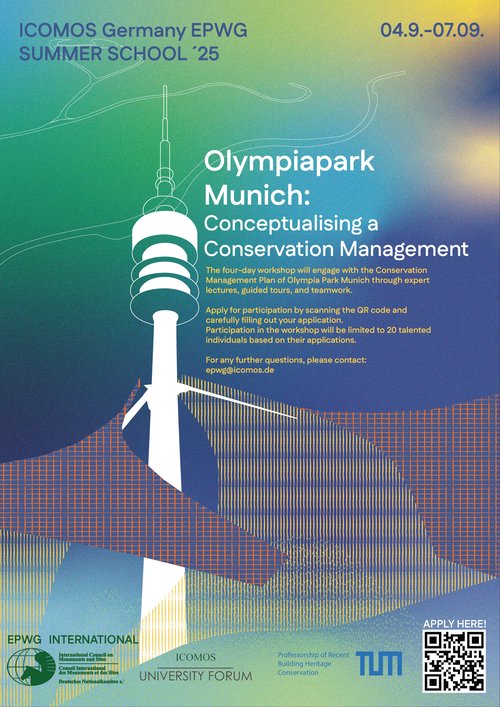
The same collaborative logic continued with the 2025 on-site Summer School Olympiapark Munich: Conceptualising a Conservation Management Plan. Moving from an online format to an in-person workshop introduced a different level of organisational complexity and required a much more direct engagement with the site itself. Organised in collaboration with the Technical University of Munich and the ICOMOS University Forum, the workshop focused on the Olympiapark as a living example of twentieth-century heritage facing contemporary challenges related to management, sustainability, tourism, and long-term conservation.
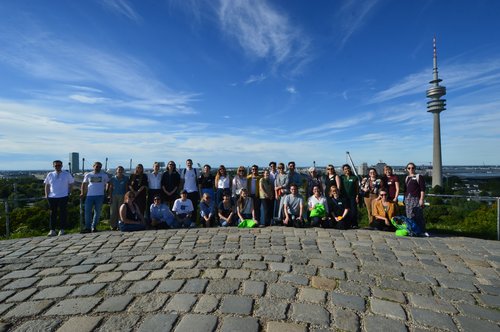
The choice of Olympiapark Munich as a case study reflected broader concerns currently shaping international heritage discussions. Built for the 1972 Olympic Games, the site combines architectural, engineering, landscape, and political significance while continuing to function as an active public and cultural space. Rather than approaching the Olympic Park as a static monument, the workshop explored it as a living heritage landscape requiring adaptive and multidisciplinary conservation strategies.
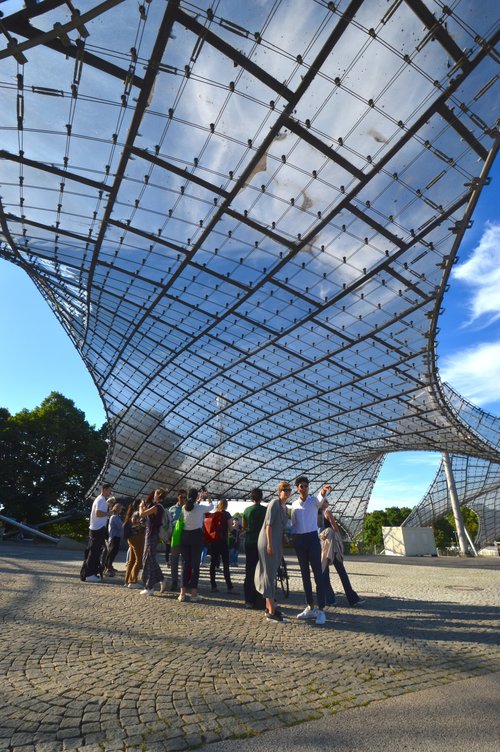
The programme was carefully designed around the experience of the site itself. Guided visits, lectures, group discussions, and workshop sessions were interconnected so that participants could continuously move between theoretical reflection and direct observation. Particular attention was given to the role of Conservation Management Plans (CMPs) as tools capable of integrating heritage values, contemporary uses, stakeholder interests, and future challenges.
The organisation of the Summer School also demonstrated the maturity reached by the EPWG collaboration. Responsibilities were shared across the organising team according to different areas of expertise, including communication, participant coordination, moderation, logistics, publication planning, and workshop facilitation. In this way, the Munich workshop showed very clearly how a shared concept could be carried collectively, while each person took responsibility for a specific part of the process. At the same time, the collaborative atmosphere remained intentionally open and supportive, encouraging exchanges between emerging professionals and senior experts.
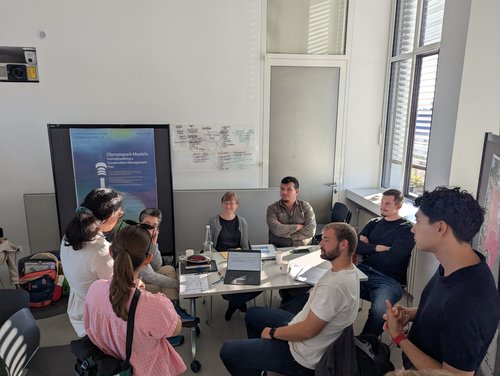
A central ambition of the workshop was to foster dialogue between generations and disciplines. The Summer School created a space in which experienced professionals and young practitioners could co-organise an event together and exchange perspectives, methodologies, and concerns regarding the future of heritage conservation. This intergenerational dialogue is particularly crucial in the field of twentieth-century heritage, where many sites remain in active use and where conservation approaches continue to evolve in response to emerging environmental, technological, and social realities. By engaging directly with an ongoing World Heritage nomination process, participants were encouraged not only to analyse existing challenges, but also to critically reflect on the future role of heritage professionals in shaping more inclusive, sustainable, and adaptive conservation practices.
More broadly, the Munich workshop illustrated how EPWG initiatives can evolve from virtual discussion platforms into in-person spaces of active heritage practice and international cooperation.
Focus on the 2026 Global Dissonant Modernities Summer School
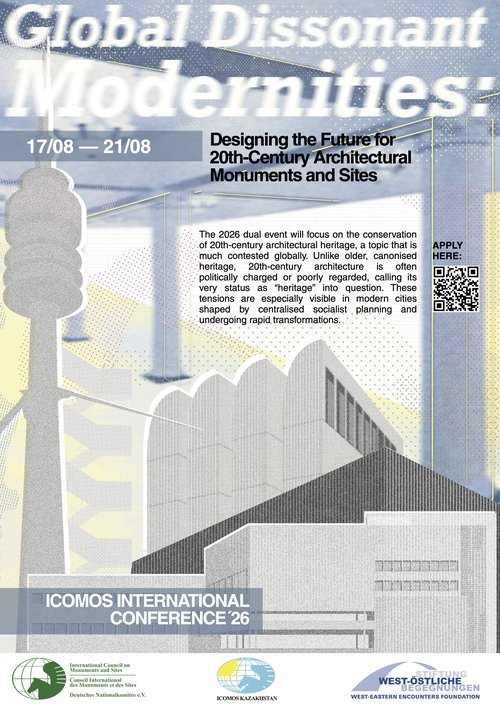
The current preparation of the conference and workshop Global Dissonant Modernities: Designing the Future for 20th-Century Architectural Monuments and Sites in Almaty, represents the next step in this evolving collaboration. Developed together with EPWG Kazakhstan, the event expands the geographical and conceptual scope of previous initiatives while continuing many of the same working methods established through earlier workshops.
The Almaty project focuses on twentieth-century heritage in Central Asia and other regions shaped by complex modern histories, political transitions, and rapidly changing urban environments. Questions surrounding socialist modernism, post-Soviet identities, dissonant heritage, and the future of modern architectural monuments remain particularly relevant in these contexts. The workshop therefore seeks to create dialogue between local perspectives and broader international discussions on the conservation of modern heritage.
Compared to earlier workshops, the Almaty initiative involves a wider and more complex network of collaborators, including EPWG groups, senior heritage experts, universities, researchers, institutional partners from different countries, and the ICOMOS University Forum.
Despite this increased scale, the project continues to rely on the same principles that shaped the earlier collaborations: regular exchange, shared conceptual work, distributed responsibilities, and mutual trust between organisers.
In many ways, Almaty represents the consolidation of a collaborative model that emerged gradually through previous EPWG activities. What initially began as small-scale exchanges between a few European EP groups has progressively developed into a broader international network capable of organising events that combine research, pedagogy, heritage practice, and intercultural dialogue and where emerging professionals are actively involved in shaping the programme, the workshop process, and the wider discussion.
Bring home message
The experiences described above suggest that the most valuable outcomes of EPWG initiatives are often not limited to the workshops themselves. They also contribute to the creation of long-term professional networks, friendships, and opportunities for future collaboration.
For colleagues in Japan, our experience may offer a simple but useful message: collaboration between emerging professionals does not need to begin with a large structure or a fully defined programme; it can begin with regular conversations, shared questions, and the willingness to create spaces where ICOMOS members can learn, organise, and think together across national and disciplinary boundaries. These spaces are especially important because they allow the principles of international heritage doctrine to be explored in practice. We recall the Nara Document on Authenticity, adopted in Japan in 1994, which remains a crucial reference in this regard, as it challenged conventional thinking in conservation by calling for greater respect for cultural and heritage diversity, and by recognising that values and authenticity must be understood within their cultural contexts.[1] In practical terms, this means that emerging professionals need opportunities to discuss, compare, and test how heritage values are understood in different places and by different communities.
Conclusion
The experience of the EP groups of Belgium, Germany, and Portugal and their collaborators suggests that such opportunities can be created through sustained and accessible formats, including online exchanges, shared workshops, collaborative events, and intergenerational dialogue with experienced professionals. In this way, EP initiatives can become laboratories for professional development, institutional renewal, and the practical application of principles that remain central to ICOMOS, including cultural diversity, mutual respect, and shared responsibility for heritage.
At the same time, these initiatives demonstrate that emerging professionals are not only future members of the heritage field, but already active contributors to contemporary heritage discourse. By organising workshops, moderating discussions, producing publications, and creating international networks, EPWG members actively participate in shaping how difficult heritage questions are discussed and understood today.
We therefore warmly invite colleagues in Japan and other EP groups to continue this exchange with us. Future collaboration could take many forms: mentoring activities, thematic discussions, joint workshops, or common reflections on how international heritage principles, including those of the Nara Document, can be translated into teaching, practice and professional development. Meaningful collaboration can begin with modest formats, provided they are sustained by trust, openness and shared responsibility.
We hope this contribution can serve as an invitation to build further bridges between emerging professionals across regions, and to develop spaces where different heritage perspectives can meet, learn from one another and grow together.
For enquiries related to the workshops, please contact us through the EPWG Secretariat:
epwg.secretary@icomos.org
epwg@icomos.de
[1] The Nara Document on Authenticity, Nara, Japan, 1994. The official text states that authenticity and values should be understood in relation to cultural context, cultural diversity, tangible and intangible expression, and the responsibilities of cultural communities. https://whc.unesco.org/archive/nara94.htm